IntegralDots ConsentHub Open banking platform
The SAMA Open Banking Framework, run as one governed platform.
ConsentHub onboards third-party providers, checks their certificates, runs the consent lifecycle and serves account information and payment initiation APIs to the security profile the framework requires: FAPI 1.0 Advanced today, ready for FAPI 2.0. Operations, security and compliance teams work from one console, and every decision is logged.
- Aligned withSAMA Open Banking Framework
- SecurityFAPI 1.0 Advanced, ready for 2.0
- ServicesAccount information and payment initiation
- RunsYour data centre or private cloud
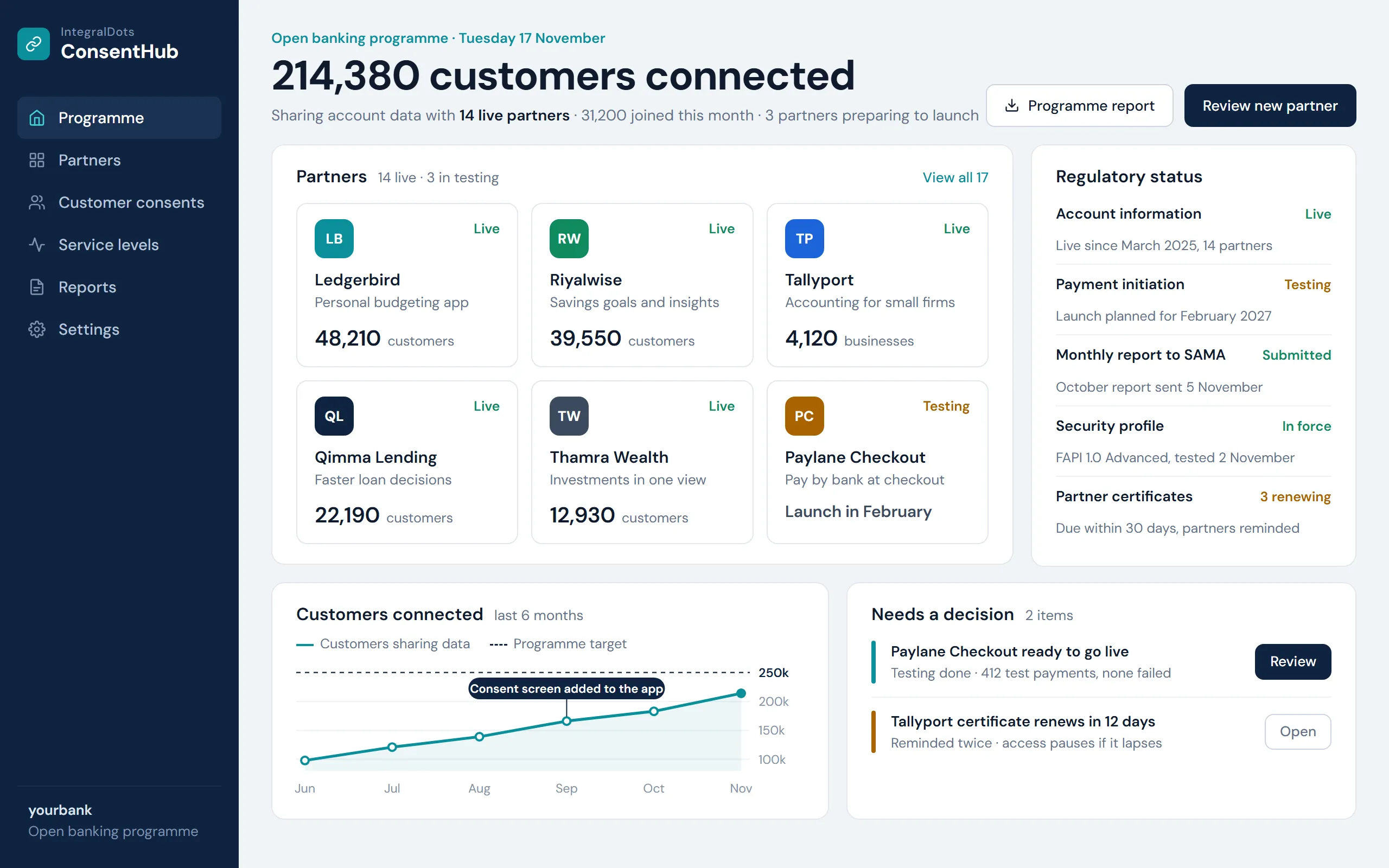
- Partners at a glanceEvery live partner, what it offers your customers and how many use it, with the ones still in testing.
- Regulatory statusEach service, the monthly report to SAMA, the security profile and partner certificates, in one column.
- Customers connectedSix months of growth against the programme target, with the moment the consent screen reached the app.
- Needs a decisionPartners asking to go live and certificates due for renewal, each with a button to act.
Product screens show demo data.
Open banking is a regulatory duty and a live service at the same time.
The SAMA Open Banking Framework sets out how banks share account information with authorised third parties and, in the next stage, let them initiate payments. To meet it, the bank has to know every TPP, check every certificate, hold every consent, and be able to prove all of it later.
- A stack in piecesGateway, authorisation server, consent store and directory checks are bought separately and wired together by hand, with gaps between them.
- Security profile driftFAPI rules are strict and detailed. A small configuration change can break conformance, and nobody notices until a TPP's calls start failing.
- Consent nobody can seeCustomers, TPPs and operations staff each hold a different picture of what was agreed and when it ends.
- Evidence on requestAudit and reporting questions take days of log searches across systems that were never built to answer them.
From TPP registration to the last API call.
Each of the five stages hands the next a verified client, a valid consent or a bound token, and logs what it did.
Onboard
TPPs register through dynamic client registration, using a software statement from the framework's directory. Roles and certificates are checked against the directory.
Consent
The TPP lodges a consent request. The customer signs in through your identity layer, picks accounts and approves in your app or web banking.
Secure
Tokens are issued under FAPI 1.0 Advanced: pushed authorisation requests, private_key_jwt client authentication, and access tokens bound to the TPP's certificate over mTLS.
Serve
Account information and payment initiation APIs reach your core banking and payment hub through your integration layer, within the consent's permissions and expiry.
Govern
Every call is metered and logged. Operations sees traffic and errors; compliance gets consent, availability and performance evidence.
What a bank needs to run open banking, in one place.
TPP registry and directory sync
Dynamic client registration, software statement validation, and a local registry kept in step with the directory, including suspended and removed participants.
Certificate checks on every call
Transport and signing certificates checked for chain, role and revocation status, with expiry warnings sent to your team and to the TPP.
The full consent lifecycle
Account access and payment consents from request to authorisation, use, expiry and revocation, with a consent dashboard your customers use in your own app.
FAPI 1.0 Advanced, ready for 2.0
mTLS, PAR, signed request objects, PKCE and private_key_jwt today. The FAPI 2.0 Security Profile can be staged and tested alongside before you switch.
Account information and payment initiation
Accounts, balances, transactions, beneficiaries and standing orders first. Payment consents and payments next, executed through your payment hub.
Traffic, limits and commercial plans
Usage by TPP and API product, fair-use limits and error analysis, plus plans for any premium APIs you offer beyond the mandated scope.
Built for the teams that run open banking day to day.
Service levels and regulatory reports
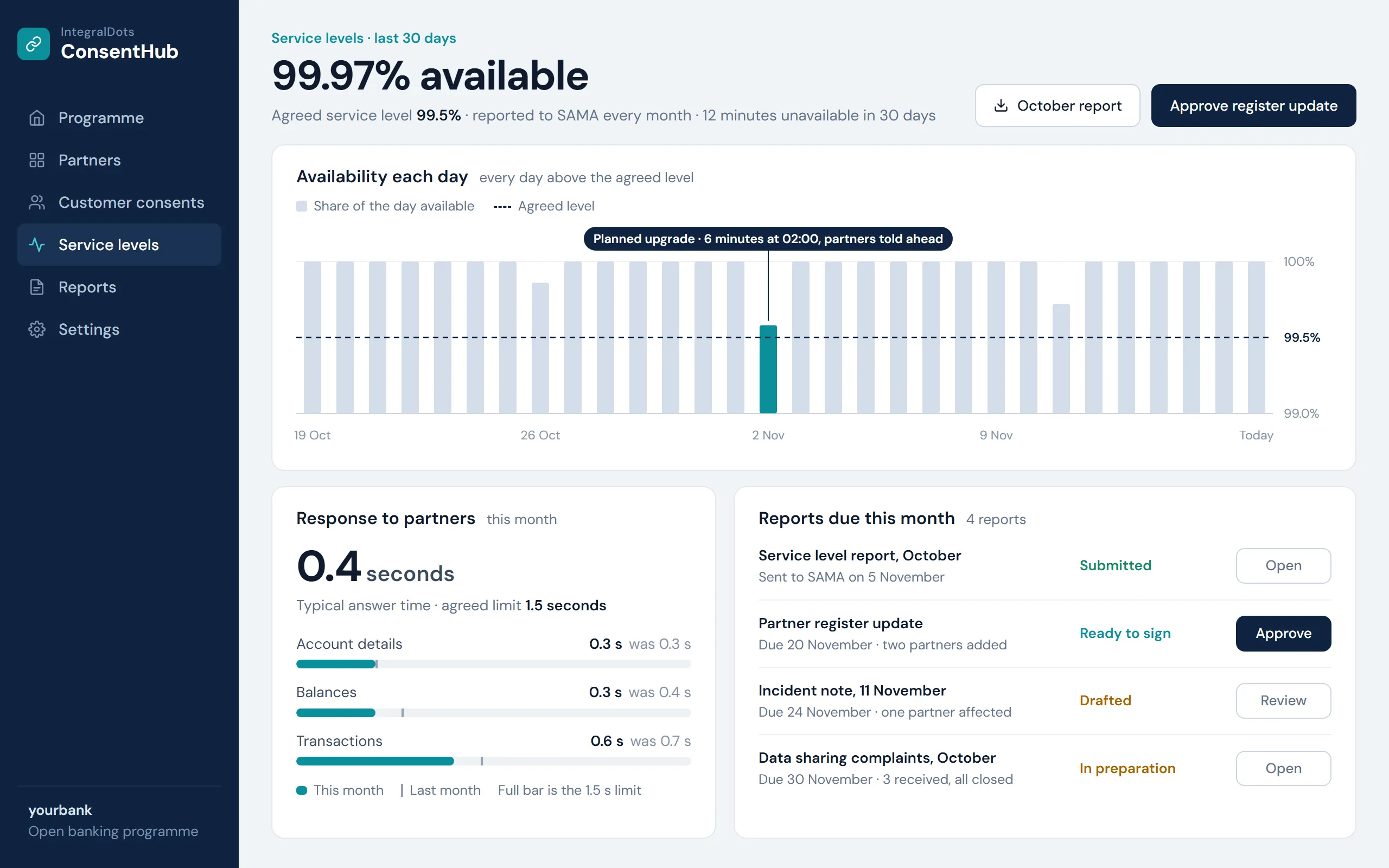
Heads of operations and compliance see whether the service met the agreed level, how quickly partners get an answer, and which reports are due this month.
- Availability each dayThirty days against the agreed level, with planned work marked so it is not mistaken for an outage.
- Response to partnersTypical answer time for each service, compared with last month and the agreed limit.
- Reports due this monthWhat has gone to SAMA, what is ready to sign and what is still being prepared.
Customer consents, as the bank and the customer see them
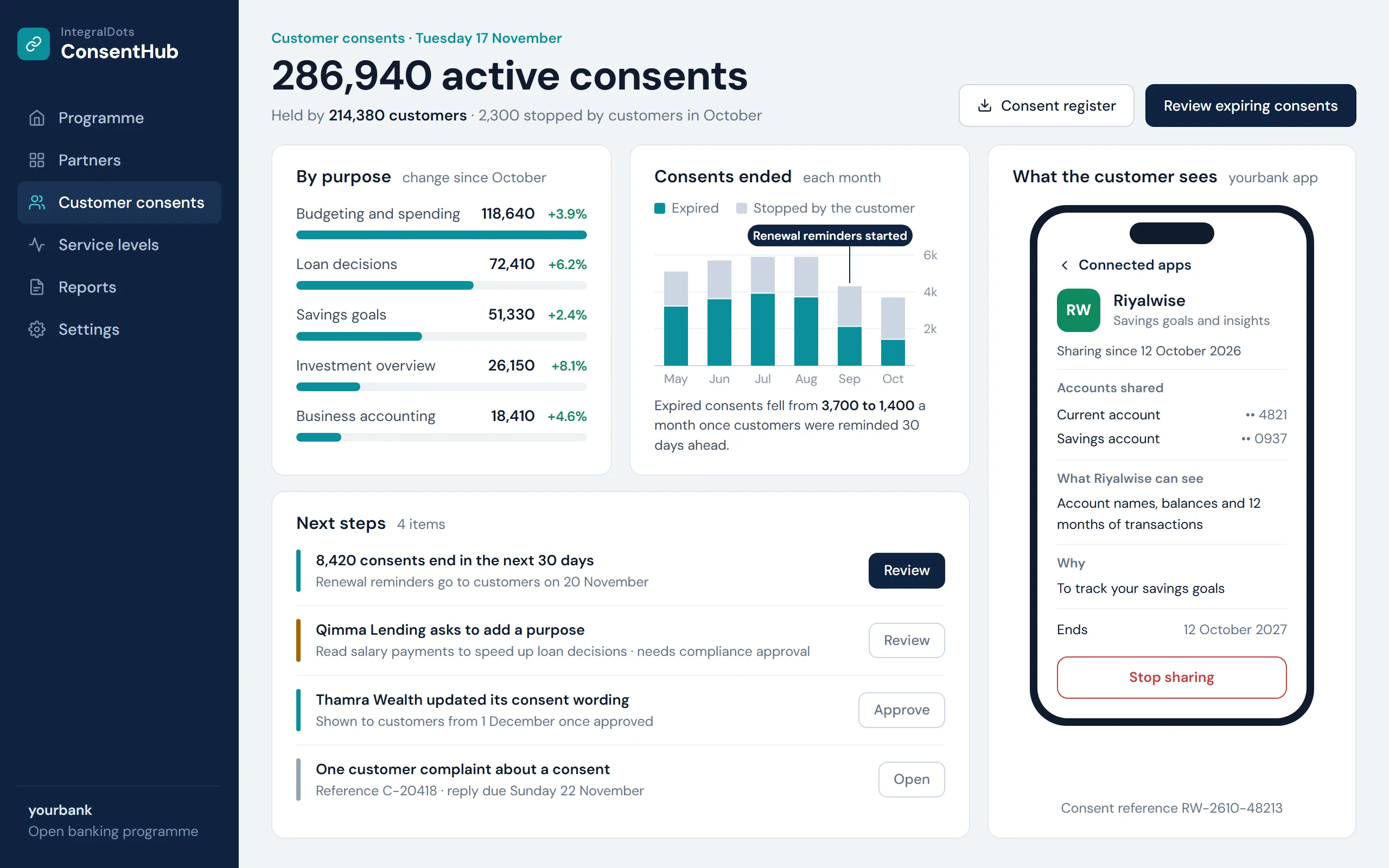
Compliance and product teams see how many customers share data and why, how many consents end each month, and exactly what a customer sees in your app.
- Consents by purposeActive consents for each purpose, with the change since last month.
- Consents endedExpired and stopped by the customer, month by month, with the effect of renewal reminders.
- The customer's viewThe consent receipt in your app: accounts shared, what the partner can see, why, until when, and a button to stop sharing.
- Next stepsExpiring consents, new purpose requests, wording changes and complaints, each with a button to act.
The security the framework expects, and the evidence auditors ask for.
Deployed inside your boundary, connected to your identity layer and your core, and designed around the framework's security profile.
Deployment
- Your data centre or private cloud in the Kingdom
- Customer data and consent records stay in your environment
- High-availability gateway and authorisation server across sites
- A separate sandbox where TPPs test before going live
Security
- FAPI 1.0 Advanced: PAR, PKCE, signed request objects and private_key_jwt
- Access tokens bound to the TPP's certificate over mTLS
- Directory, certificate and revocation checks on every call
- Signing keys held in your HSM
Governance
- Consent records with their full history
- Maker-checker approval for TPP, product and security changes
- Availability, performance and usage figures for regulatory reporting
- Tamper-evident audit log, retained under your records policy
Integration
- Core banking and payment hub through your integration layer
- Customer authentication through OneSign or your current identity provider
- Payment initiation on instant rails through PayConnect
- Events and logs to your SIEM, monitoring and ticketing tools
- SAMA Open Banking Framework
- FAPI 1.0 Advanced
- FAPI 2.0 Security Profile
- OAuth 2.0 and OpenID Connect
- mTLS certificate-bound tokens (RFC 8705)
- Pushed authorisation requests (RFC 9126)
- OpenAPI 3
- PDPL data handling
Questions banks ask about open banking
Does it cover both account information and payment initiation?
Yes. Account information is the base. Payment initiation reuses the same TPP onboarding, consent and security layers, and payments are executed through your payment hub. The framework introduces these services in stages, and each API product can be switched on when you are ready for it.
Which FAPI profile does it use?
FAPI 1.0 Advanced, which is what open banking in the Kingdom uses today, with pushed authorisation requests, private_key_jwt client authentication and certificate-bound tokens over mTLS. The FAPI 2.0 Security Profile can be configured and tested in parallel, so the move can be planned and tested in advance.
Can we keep our existing API gateway or identity provider?
Often, yes. ConsentHub can sit behind an existing API gateway. Customer authentication can run through OneSign or your current identity provider, provided it can meet the security profile. We check this with your architects at the start.
How do customers see and revoke their consents?
Through a consent dashboard in your own app and web banking, built on the ConsentHub consent APIs. A revocation takes effect on the TPP's tokens straight away and is recorded in the consent history.
How does a rollout usually start?
With account information in the sandbox and a few TPPs, then production, then payment initiation. The pace depends mostly on your core banking and channel landscape, which we review first.
Related products
 Identity
OneSign Customer identity and access (CIAM)
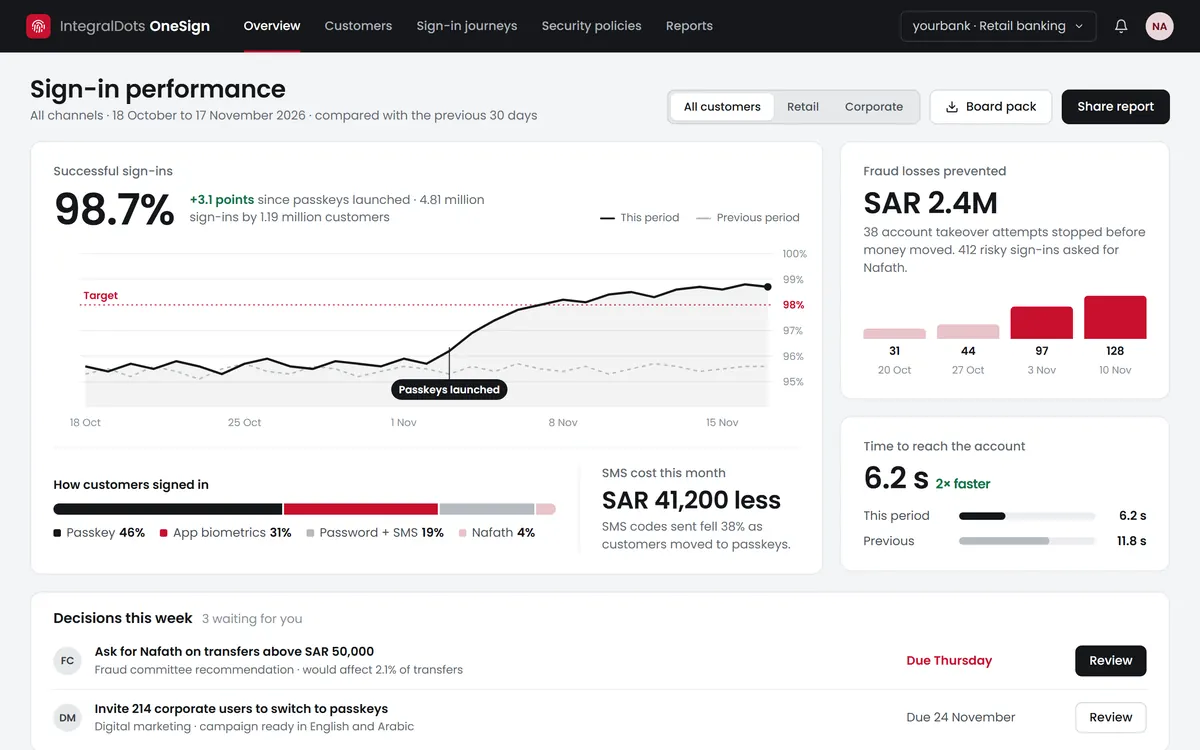
One customer identity across channels, with risk-based step-up, Nafath federation and the tokens that secure open banking.
Explore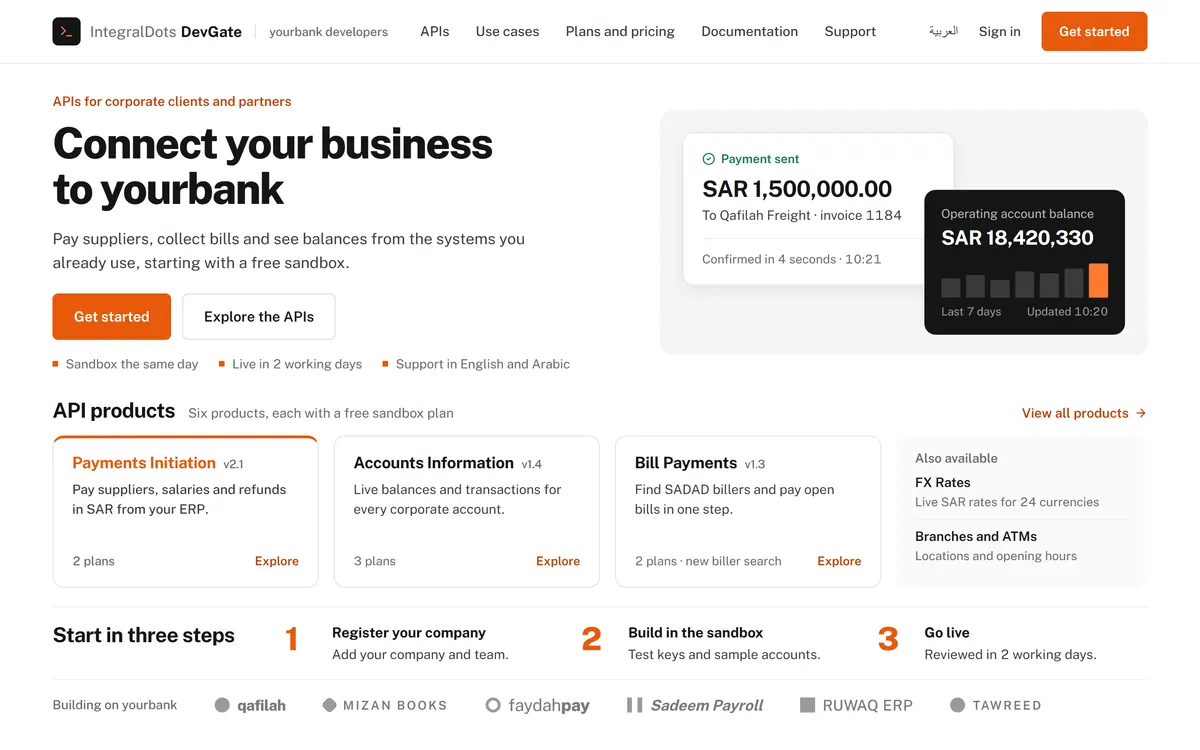 API management
DevGate API developer portal
Documentation, sandbox access and self-service onboarding for the developers who call your APIs.
Explore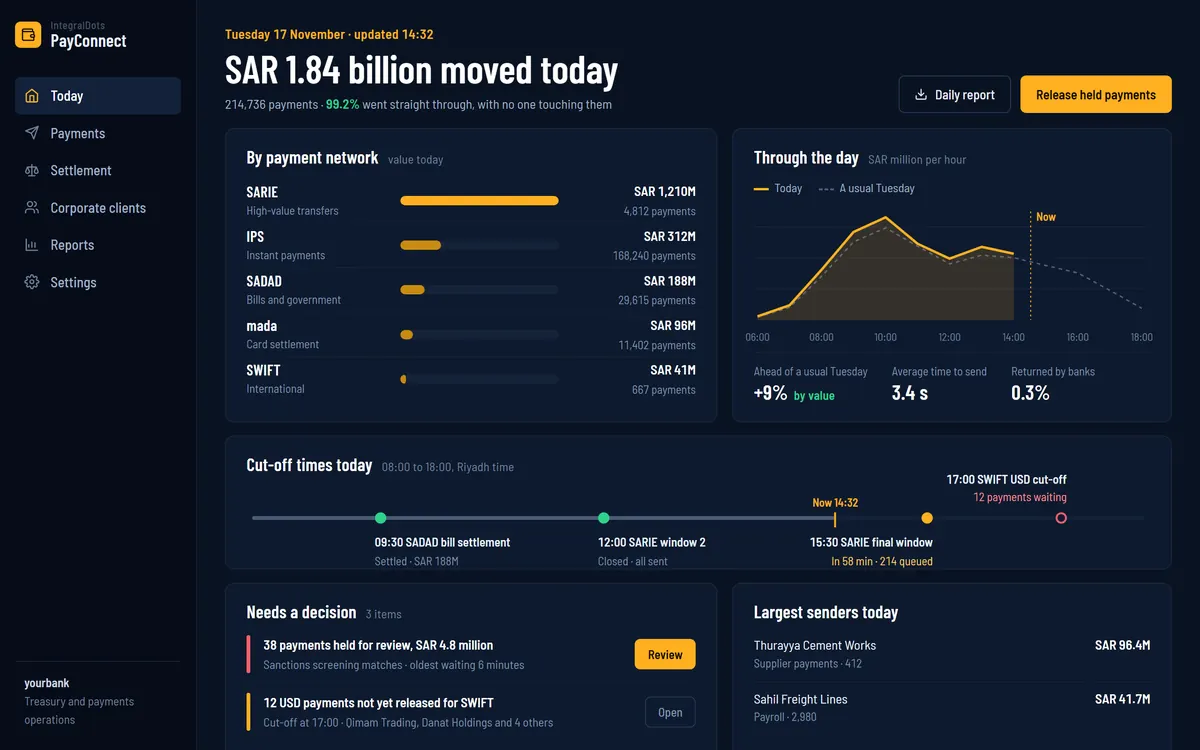 Payments
PayConnect Payment integration suite
Instant, bulk and biller payment connectivity between your payment hub and core banking.
Explore